How Can Hydrotherapy Help Your Dog (And What Can It Not Do)?
The natural resistance, soft warmth and supporting buoyancy of hydrotherapy allow your dog to build themselves up to move more comfortably on land, which can help following surgery, when dealing with arthritis, or to help lose weight.
Because it is so gentle yet remarkably effective, hydrotherapy has become remarkably popular amongst dog owners, and many vets will recommend it when suitable following appropriate medical treatment.
However, it is not a replacement for medical treatment, and it is not a perfect choice for every dog. Here is what a hydrotherapy session can do for your dog, but also what it should not be expected to do.
What Can Hydrotherapy Help With?
Hydrotherapy in pets works in the same way that hydrotherapy helps in humans; it provides support, resistance and soothing warmth, which helps to improve mobility, minimise swelling and seized-up joints, and allows your pet to build themselves back up comfortably if walks are causing pain.
Because of this, hydrotherapy, like any other form of physiotherapy, is a gradual change that makes a big impact over an entire therapy course.
In particular, it can help when:
- Your dog struggles when going on walks or other low-impact exercise causes lameness
- Your dog struggles with long trips or exercise sessions
- Your dog needs to analyse how they are walking to plan further treatment
- Your dog needs to maintain their muscles when they cannot move as freely after surgery
- Your dog needs a confidence boost following an accident and seems unsteady on their feet
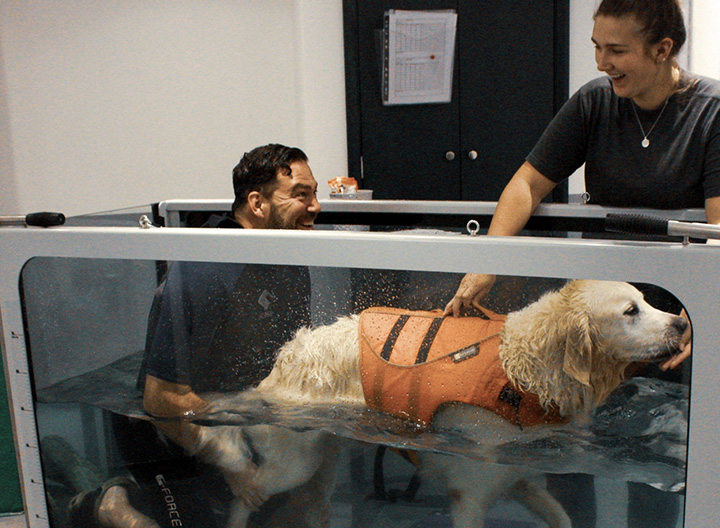
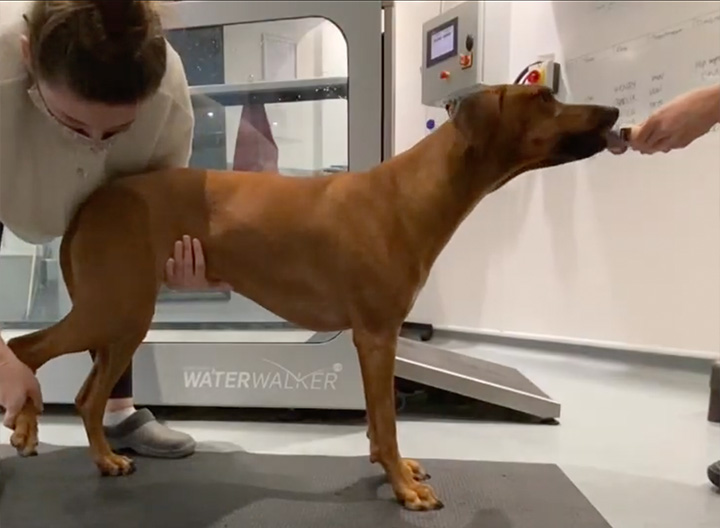
This can sometimes involve swimming or sometimes an underwater treadmill, with the water level and nature of the hydrotherapy exercises typically discussed between a therapist, the owner and sometimes a vet.
Hydrotherapy is also not the same as swimming, as it is structured around boosting health and confidence rather than being a relatively free exercise.
What Can Hydrotherapy Not Help With?
A hydrotherapy centre will set realistic expectations for how they can help your dog; it is not the best solution for every pet, progression is a marathon rather than a sprint, and it cannot help treat serious conditions which require medication, surgery or other veterinary interventions.
If your dog has a dysplastic hip joint, where abnormal bone growth affects mobility, they may require surgery, painkillers, weight loss or a dedicated physiotherapy plan, and hydrotherapy is unlikely to help on its own.
Similarly, if your dog has a torn muscle, particularly a cruciate ligament, they will almost certainly need surgery and dedicated rehabilitation. The latter may involve hydrotherapy, but water-based exercise will not fix a torn muscle.
As well as this, if your dog requires surgery for any reason, hydrotherapy cannot provide much more than perhaps pain relief. If your dog is suffering from lameness that is getting worse, has rapidly emerged or has no explanation, your vet should be the first place to contact.
Finally, whilst hydrotherapy can often help with pain relief, it should not be assumed to be a painkiller or a panacea; any source of pain needs to be investigated thoroughly, and any treatment or therapy plan needs to be discussed with a vet.
-
Previous
-
Next