What Is Canine Rehabilitation And When Might Your Dog Need It?
Canine rehabilitation is a structured approach to helping dogs recover movement, strength and confidence following injury, illness or surgery. It can also help manage ongoing conditions and support mobility as dogs get older.
Rather than being a single treatment, canine rehabilitation combines different therapies and exercises according to an individual dog's needs.
Depending on the dog's condition and stage of recovery, a rehabilitation programme may include physiotherapy, hydrotherapy, underwater treadmill work, laser therapy and targeted exercise.
When might a dog need rehabilitation?
Dogs can benefit from rehabilitation in many different circumstances. It is commonly considered following orthopaedic surgery or an injury affecting the muscles, joints, bones or ligaments.
For example, rehabilitation may form part of recovery following:
- Cruciate ligament surgery
- Other orthopaedic procedures
- Muscle or soft tissue injuries
- Joint problems
- Hip or elbow conditions
- Neurological problems
- Periods of restricted exercise or rest
However, rehabilitation is not only for dogs recovering from an operation. A programme may also be appropriate for an older dog experiencing stiffness or reduced mobility, or a dog that has lost strength or fitness following illness.
What happens during canine rehabilitation?
A rehabilitation programme should be tailored to the individual dog rather than following a standard formula.
An initial assessment can help establish how the dog is moving, their current level of strength and mobility, and any areas where they may need support.
Their diagnosis, medical history, age, fitness level and rehabilitation goals can all influence the approach. The programme can then be adjusted as the dog progresses.
Which treatments can be part of rehabilitation?
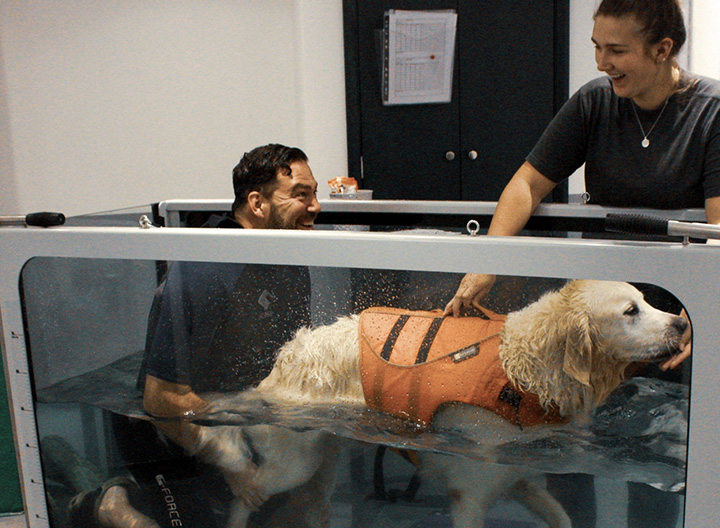
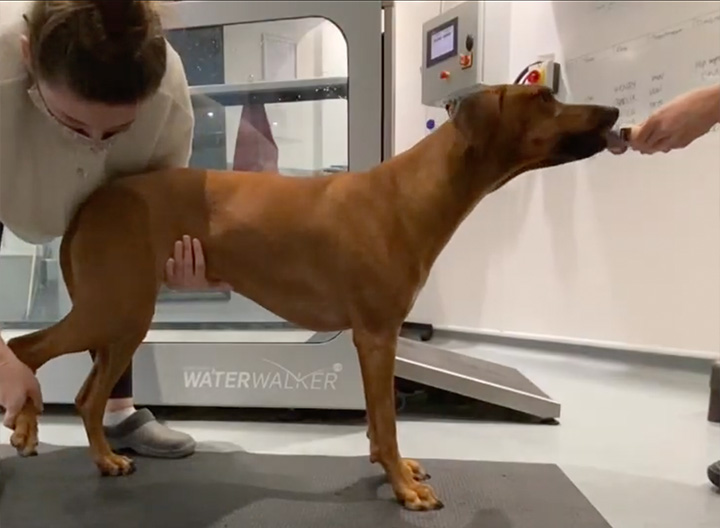
Different therapies can be used at different stages of recovery. Hydrotherapy allows dogs to exercise with reduced weight-bearing, while the resistance of the water can help support controlled movement and strengthening.
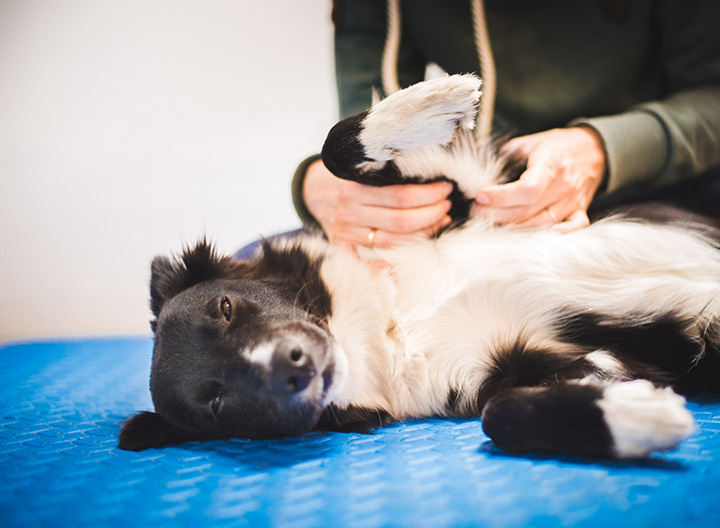
This may involve swimming in a hydrotherapy pool or using an underwater treadmill. Physiotherapy can help address movement, flexibility, strength and functional problems through appropriate hands-on techniques and exercises.
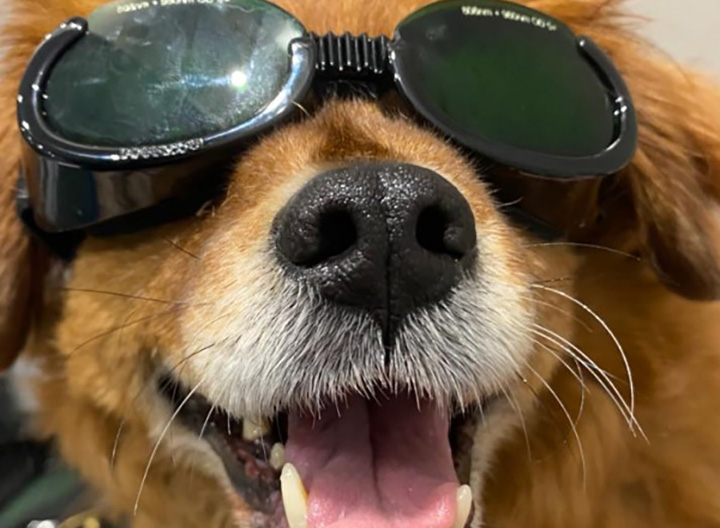
Laser therapy may also form part of a wider rehabilitation programme where appropriate, while specific exercise programmes can help dogs gradually rebuild strength, coordination and confidence.
How long does canine rehabilitation take?
There is no universal recovery time. Some dogs may need rehabilitation for a relatively short period following an injury, while others with chronic or age-related conditions may benefit from longer-term support.
Progress can depend on the underlying condition, the dog's age and fitness, the type of procedure or injury involved and how well they respond to their rehabilitation programme.
Could rehabilitation benefit your dog?
If your dog has had surgery, suffered an injury, developed mobility problems or is struggling to return to normal activity, canine rehabilitation may be worth discussing with your veterinary team or a qualified rehabilitation professional.
With the right assessment and a carefully structured programme, therapies such as hydrotherapy, physiotherapy and exercise can become part of a coordinated approach to helping your dog move more comfortably and rebuild strength.
-
Previous
-
Next