How Can You Safely Increase Your Dog's Exercise After A Period Of Rest?
After a period of rest, it can be tempting to let your dog return straight to their usual activities. However, whether your dog has been resting because of an injury, illness, surgery or simply a reduction in activity, increasing exercise gradually is usually the safer approach.
Too much activity too soon can place unnecessary strain on muscles and joints that have become weaker during a period of reduced movement. A structured return to exercise can help your dog rebuild strength, stamina and confidence.
Why does exercise need to increase gradually?
When a dog is resting, their fitness and muscle strength can decrease. Even if they appear keen to get moving again, their body may not yet be ready for their previous level of activity.
This can be particularly important following an injury or operation. A dog may seem much better before they have fully regained their strength and normal movement.
A gradual increase gives the body time to adapt. It also makes it easier to identify signs that your dog is struggling before a small problem becomes a bigger setback.
Start with controlled exercise
Your veterinary or rehabilitation professional may recommend a specific exercise programme depending on why your dog has been resting.
For some dogs, this could begin with short, controlled walks on a lead. The duration and intensity can then be increased progressively as appropriate.
Avoid assuming that because your dog manages one longer walk comfortably, they are ready to return immediately to running, jumping, chasing toys or unrestricted off-lead exercise.
The aim is consistent, controlled progress rather than doing as much as possible on a good day.
Watch how your dog responds
Pay attention to how your dog moves during exercise and afterwards.
Signs that your dog may be struggling can include:
- Becoming noticeably tired during or after exercise
- Limping or developing an altered gait
- Stiffness after activity
- Reluctance to walk, climb stairs or move around
- Changes in their usual behaviour
- Difficulty getting up or settling comfortably
If you notice a significant or persistent change, speak to your veterinary team rather than simply pushing through it.
Rehabilitation can help rebuild fitness
For dogs returning from injury, surgery or illness, canine rehabilitation can provide a structured way to rebuild movement and strength.
Rather than relying solely on ordinary walks, a rehabilitation programme may combine several approaches according to the dog's individual needs.
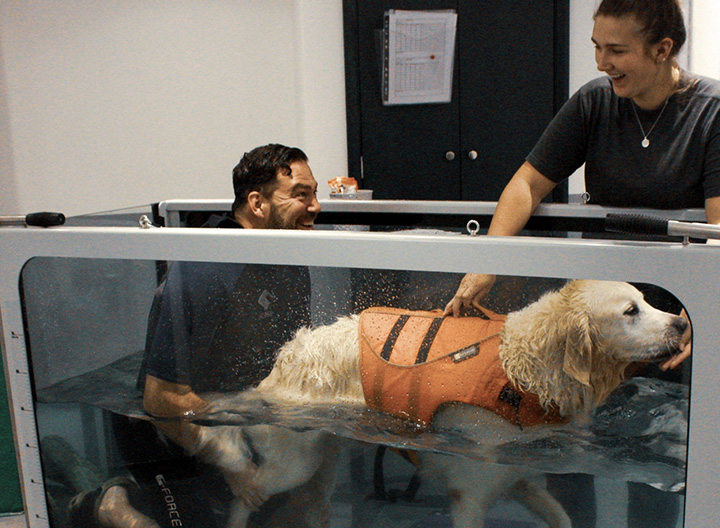
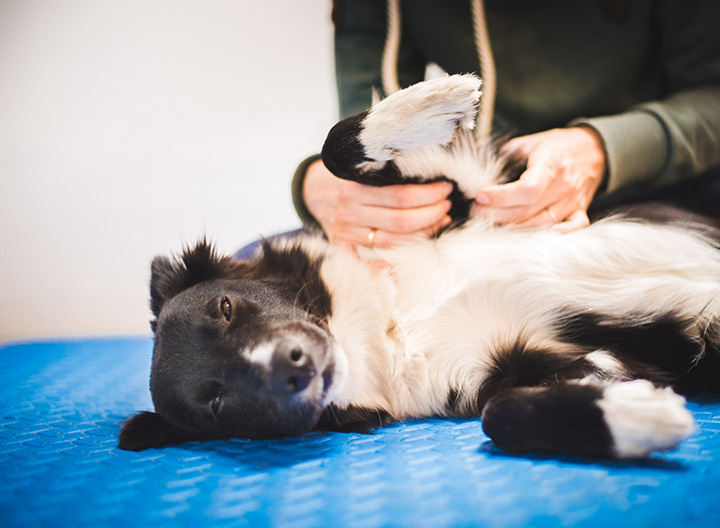
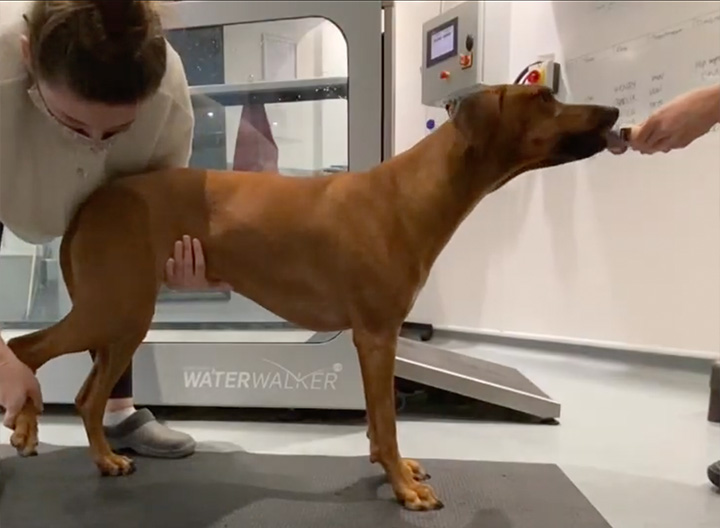
Physiotherapy, controlled exercise, hydrotherapy, underwater treadmill work and other therapies can all form part of a rehabilitation journey where appropriate.
Hydrotherapy, for example, can allow a dog to exercise in a controlled environment while reducing some of the weight placed on their limbs. An underwater treadmill can also provide controlled movement and resistance that can be adjusted as the dog progresses.
A personalised canine rehabilitation programme can help guide that progression and provide appropriate support at each stage of recovery. The goal is a confident return to activity without putting unnecessary pressure on a body that may still be recovering.
-
Previous